


PFAS-free filter design: Peak performance for the next generation of air filtration
Rethinking filtration is in our DNA. For years, we have been working to remove PFAS from our filter media entirely – not because regulators are pushing us to, but because it is the natural next step for a future-proof technology we have helped shape for decades.
What we've achieved is a portfolio of filters without added PFAS that holds its own against every relevant performance benchmark – and in selected applications, surpasses it. Our filtration solutions give partners and customers a meaningful head start on the complex regulatory requirements that lie ahead.
What are PFAS, how do they work, and why were they used?
Per- and polyfluoroalkyl substances – PFAS for short – comprise more than 10,000 distinct compounds. Their extraordinary chemical stability really sets them apart: virtually indestructible carbon-fluorine bonds make them water-, grease- and dirt-repellent, heat-resistant and exceptionally durable. However, the very properties that make PFAS industrially valuable are also their biggest problem in the environment. They do not break down, and they accumulate in soils, waterways and living organisms. It is no coincidence that PFAS are also known as "forever chemicals".
Beyond ingestion through food and drinking water, PFAS in the air represent a frequently underestimated exposure route. PFAS emissions from industrial processes enter the atmosphere via two pathways: as volatile PFAS gases that pass directly into the gas phase, and as volatile precursor substances that are only converted into persistent PFAS compounds through so-called precursor degradation. Carried by air currents, PFAS-bearing airborne particles – including particle-bound PFAS from industrial sources – can travel vast distances and reach even remote ecosystems.
Indoors, PFAS are just as much a concern. Aerosols from treated textiles, floor coverings and cleaning products release PFAS into the indoor air, and breathing them in – even at low concentrations – carries real risk, especially in poorly ventilated buildings. This is increasingly acknowledged in scientific research and by policymakers as a distinct exposure pathway in its own right. Innovative filter media in HVAC systems have a genuine part to play: a well-designed filtration concept reduces the particle-bound PFAS load in supply air – without adding to that burden itself.
PFAS are slow to leave the human body – they build up over time and are excreted only at a fraction of the rate at which they are absorbed. According to the European Environment Agency (EEA) and the German Federal Institute for Risk Assessment (BfR), animal studies indicate that PFAS can cause liver damage, thyroid disorders, obesity, fertility problems and cancer. The European Food Safety Authority (EFSA) has established a tolerable weekly intake of 4.4 nanograms per kilogram of body weight for four PFAS compounds – PFOA, PFOS, PFNA and PFHxS. On this basis, EU-wide maximum levels for these four compounds in certain foodstuffs have been in force since January 2023.
The environmental consequences are equally serious: legal limits under the Water Framework Directive are regularly exceeded in European surface waters – according to European Environment Agency data*, in 51 to 60 per cent of rivers examined, 11 to 35 per cent of lakes, and up to 100 per cent of transitional and coastal waters.
*Source: https://www.eea.europa.eu/en/analysis/publications/pfas-pollution-in-european-waters
In industry, PFAS are particularly prevalent in safety-critical applications: as refrigerants in heat pumps and air conditioning systems – whose refrigerant emissions are increasingly attracting attention under the EU F-Gas Regulation – as coatings in semiconductor manufacturing, and as binders in lithium-ion batteries.
In air filtration, too, they served a clear technical purpose: wet-laid glass fibre nonwovens, a core material in HVAC applications, were routinely impregnated with PFAS. This made them water-repellent, chemically resistant and optimised for long service life. PFAS reduced deposits on the filter surface, improved airflow and maintained filter performance even under conditions of humidity and exposure to aggressive substances. In short: PFAS solved real technical problems. That is precisely why replacing them was no straightforward undertaking – and precisely why our PFAS-free design approach is far more than a simple material swap.
PFAS-free filter design: New technology with equal or better performance
Our response to the PFAS challenge is the result of targeted research and development work begun in 2024 – carried out in close collaboration with material suppliers who share MANN+HUMMEL Air Filtration's exacting quality standards.
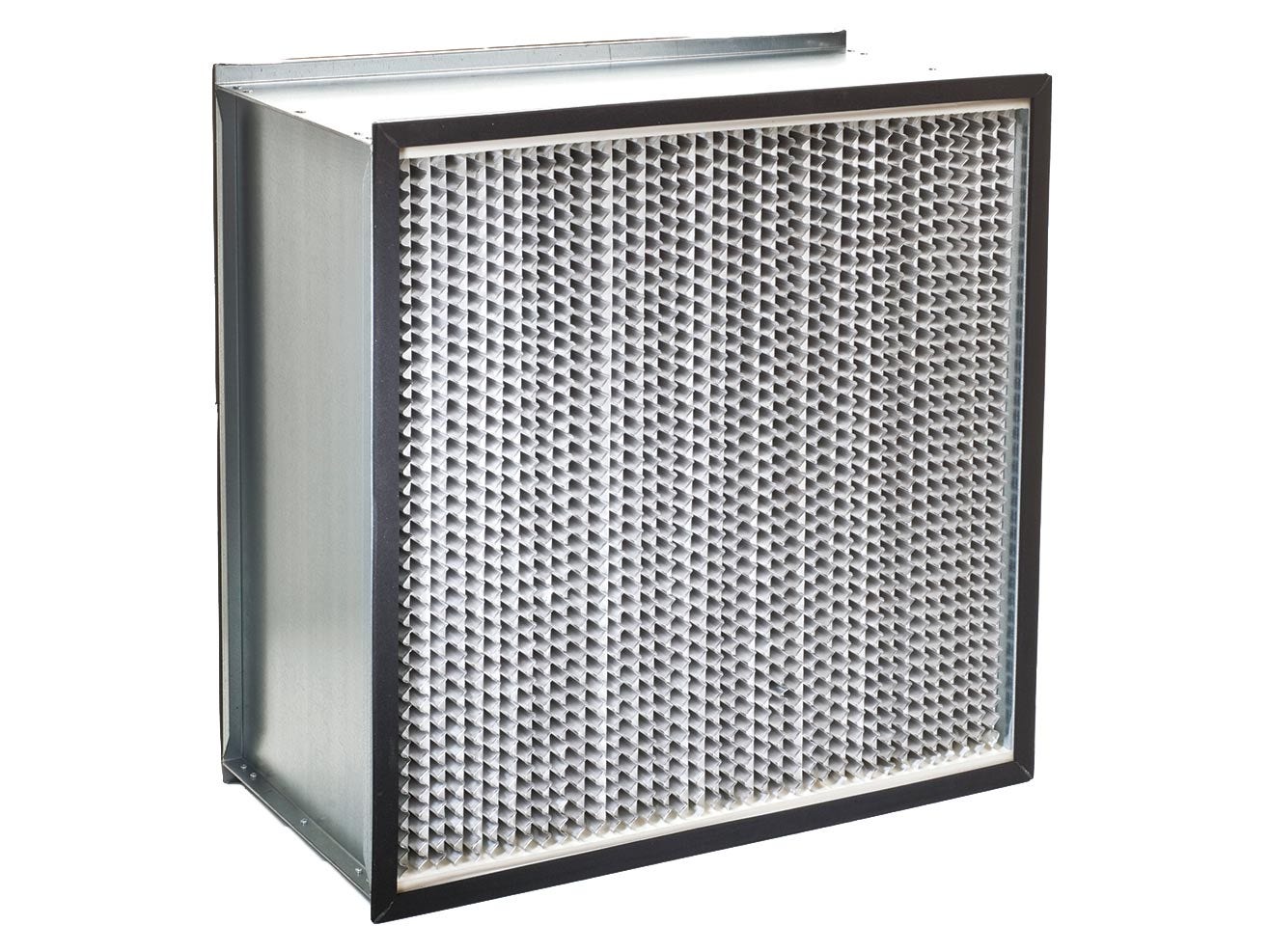
Our Cleaner Air Portfolio covers all filtration stages – from coarse pre-filtration for HVAC through to HEPA filter classes for the most demanding cleanroom applications. Products without added PFAS are available at every stage.
A nuanced view of the filter media in use is important here:
- Synthetic nonwovens and unimpregnated glass fibre media were already technically PFAS-free – no action was needed on these.
- Wet-laid glass fibre nonwovens are the central focus of our innovation. Here, we have developed a solution that dispenses entirely with PFAS impregnation – with demonstrated moisture resistance, chemical stability and unchanged airflow with the same performance.
- ePTFE media are inherently PFAS-containing as a perfluorinated polymer. No viable PFAS-free alternative for this media type is currently available. We communicate this openly – because technological transparency is, for us, non-negotiable.
The product portfolio with PFAS-free design of MANN+HUMMEL Air Filtration is continually expanding. It currently includes, amongst other things, high-efficiency HEPA filters for HVAC in areas where material purity and full traceability are paramount – such as food and beverage and the pharmaceutical industry.
Our filters without added PFAS perform up to 20 per cent below current regulatory limits – a deliberately built-in ESG compliance buffer ahead of future regulatory steps. In selected products, the optimised media also deliver measurable performance gains: higher separation efficiency at a reduced pressure drop, which translates directly into lower energy consumption during operation.
The principle of “no intentional PFAS use and no performance compromise” extends well beyond air filtration at MANN+HUMMEL. In our Cleaner Industry segment, we are replacing glass fibre media in compressed air applications entirely with products without added PFAS – no parallel operation, no hybrid solutions, with adapted line labelling for full traceability. In our Cleaner Mobility segment, PFAS-free media for hydraulic systems are planned for 2026. And in our Cleaner Water segment, we are developing fluorine-free polymer membranes as an alternative to PVDF. Our direction is clear – across every area of the business.
Our Products with PFAS‑free filter designs

The next generation of air filtration starts with MANN+HUMMEL: less forever chemistry, no compromise on performance, and solutions built to last – whatever the filtration requirement, from pre-filtration to HEPA class.


PFAS-free filter design: Certifications and test standards
Trust is built on evidence, not on claims. All PFAS-free filter design solutions from MANN+HUMMEL Air Filtration have undergone a comprehensive testing process:
- ISO 846: Proof of microorganism resistance – resistance to mould, bacteria and fungi in the filter medium.
- EC 1935/2004 & EC 10/2011: European legislations for materials in contact with food – essential for filters used in the food, beverage and pharmaceutical industries.
- UL 900: Fire behaviour in HVAC systems – testing of fire and flame resistance in heating, ventilation and air conditioning systems.
- UV resistance, H₂O₂ resistance, oil loading test: Targeted stress tests for HEPA filters under chemical, mechanical and oil-laden operating conditions.
- Moisture resistance & dust holding capacity: Performance verification under real-world, demanding HVAC operating conditions.
The testing data tells a clear story: PFAS-free media hold their own against their predecessors across the board, and in many applications, they actually come out ahead.
What filtration products without added PFAS mean for your business
Switching to a PFAS-free filter design with MANN+HUMMEL Air Filtration is not an experiment. It is a fully documented product transition – straightforward, and with tangible added value:
- No performance compromise: The same filter classes, the same separation efficiencies, and equal or improved service life – verified by independent testing and recognised standards.
- A future-proof supply chain: ECHA is currently reviewing a universal PFAS restriction proposal, with initial results expected during 2026. In parallel, the EU F-Gas Regulation continues to phase in restrictions on fluorinated compounds across further industrial sectors. Switching to filters without added PFAS today means acting with a head start towards compliance – without time pressure, without transition periods.
- Full traceability: Adapted line labelling makes every PFAS-free design product line comprehensively documentable – a decisive advantage in regulated industries and during audits.
Contact us
At MANN+HUMMEL, we’re here to support your air filtration needs! Whether you have questions about our products or need tailored solutions, our expert team is ready to assist you. Reach out to us via email, telephone or contact form to discuss your requirements, and let’s work together to enhance your air quality. Contact us today and experience exceptional service tailored to your business!